


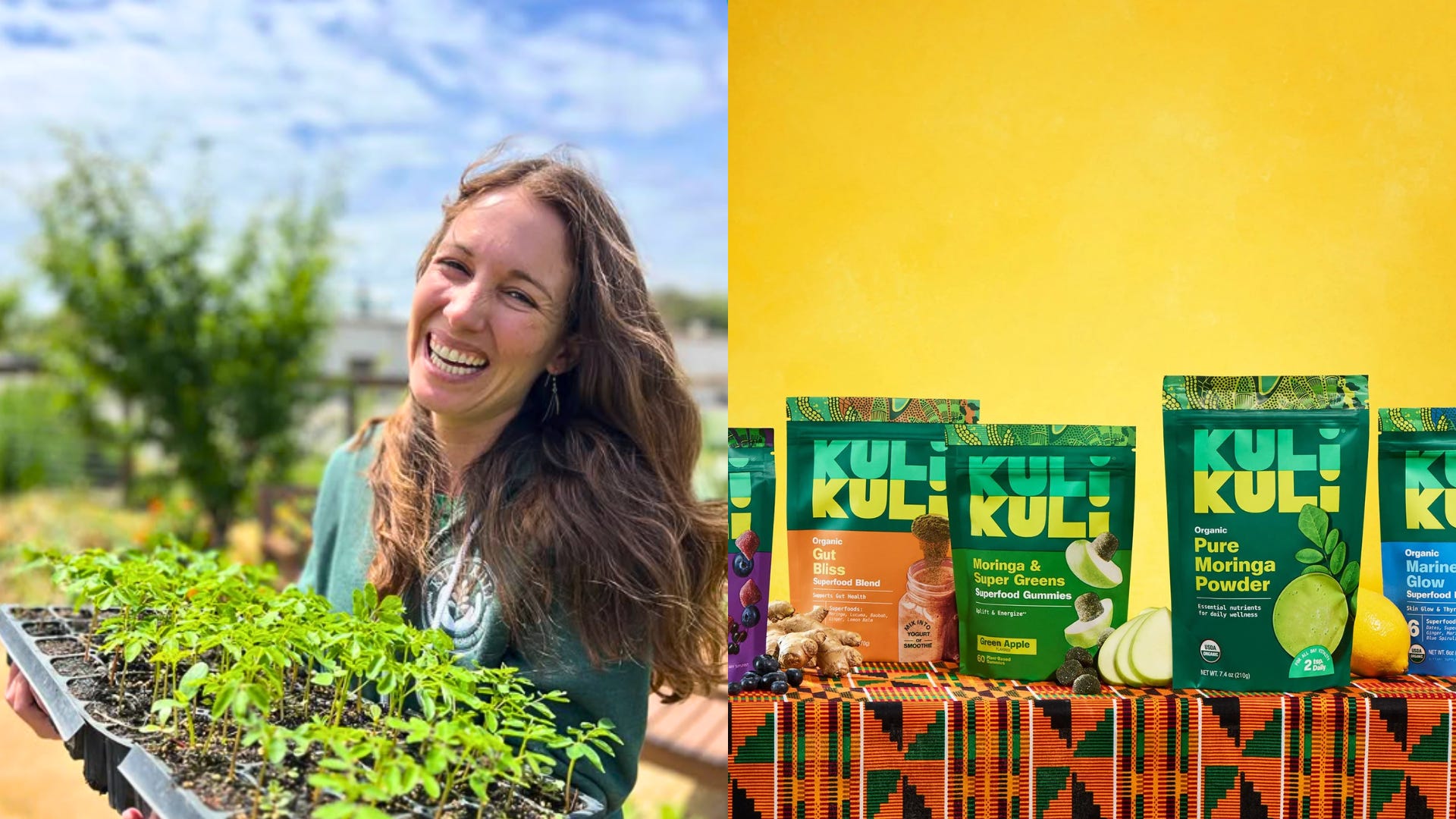
Meet Lisa Curtis, the founder of Kuli Kuli, a brand turning superfoods into staple foods. Moringa, baobab, lucuma… ingredients most Americans never heard of, now in stores across the country.
It started in the Peace Corps. Posted in rural Niger, running on carbs and constantly exhausted, Lisa asked the locals what she could eat for more energy. They walked to a tree, pulled off its leaves, and mixed them into a snack called kuli kuli.
Those leaves were moringa, and they worked. Within weeks, Lisa felt stronger. She came home obsessed. Twelve years later, Kuli Kuli is in 11,000 retail doors, has reached 1M customers, and crossed $50M in revenue.
00:19 - The mind behind Kuli Kuli
03:08 - Nobody buys “good for the world”
06:06 - Scale changes everything
08:22 - The powder pivot
10:51 - Riding the wellness wave
13:41 - The 20% rule
16:32 - Small on purpose
18:36 - Still here, still going

$50M+ revenue: Built over 12 years
11,000 doors: Whole Foods, Sprouts, Walmart, Costco, etc.
20% of SKUs cut annually: Ruthless focus on best-performers
Speak your customer’s value, not yours. Lisa assumed the Peace Corps story would sell. It didn’t. What moved product was better digestion, more energy, daily greens. “Nobody walks into a grocery store asking what’s best for the world.” They ask what’s in it for them. Impact matters, but utility closes the sale.
Pivot the format. Protect the core. Kuli Kuli started with bars, then pivoted to powders, lattes, gummies. The formats changed. The ingredient didn’t. If something else has better margins, velocity, or distribution, swap the vehicle and stay the course.
Talk to your customers AND your suppliers. Lisa listened obsessively to customers: what they liked, what they didn’t, how they actually use the product. But she also talked to her farmers and learned what else they were growing. That’s how baobab became part of her portfolio. Most founders only look at demand. The smarter ones look at supply too.
Flip the default advice. You don’t need an MBA to start a CPG company. You don’t need funding first. You don’t need to go big out the gate. “I didn’t have much business experience aside from my own business,” says Lisa. She worked nights and weekends. Crowdfunded the first production run. Being scrappy isn’t a liability. It’s the only time you can move that fast.
Kill what isn’t working before it compounds. Every year, Kuli Kuli cuts 20% of its SKUs. Wellness shots. Superfood bark. Products customers liked but didn’t have the numbers to justify the shelf space. Pruning is the best way to focus on what’s actually growing.
Market signal → Nobody buys your mission. They buy the outcome. Energy. Digestion. Results. The clearest benefit wins. Every time.

The SKU kill test
When a product underperforms, diagnose before you discontinue.
Low velocity + bad reviews → Product problem. Kill it.
Low velocity + good reviews → Discovery problem. Fix awareness, price, or placement.
High velocity + weak margins → Cost structure problem. Fix COGS or pricing.
High velocity + low repeat → Habit problem. You haven't earned loyalty.


