


Happy Tuesday. This week, we’re sharing:
🐮 How a $13 beef tallow tortilla chip keeps selling out
🌶️ SKUs get spicy, Big Food’s lawyers are eating our lunch, private labels push for more shelf space
📅 Newtopia Now, GROW New York 2026, In the Room with 4 Retail Buyers
IN PARTNERSHIP WITH

You got into Core-Mark. You got into McLane. So why aren’t you in stores?
Getting into a national wholesaler is a big step. Getting mid-market c-store chains to carry you is another story. This is where a lot of emerging brands get stuck: they have distribution, but haven’t gotten buyers to say yes.
SwiftSku’s C-Store Chain Accelerator brings qualified brands directly in front of hundreds of chain buyers, backed with store-level scan data buyers trust.
Already in a national wholesaler and still trying to get more chains on board? Talk to SwiftSku.

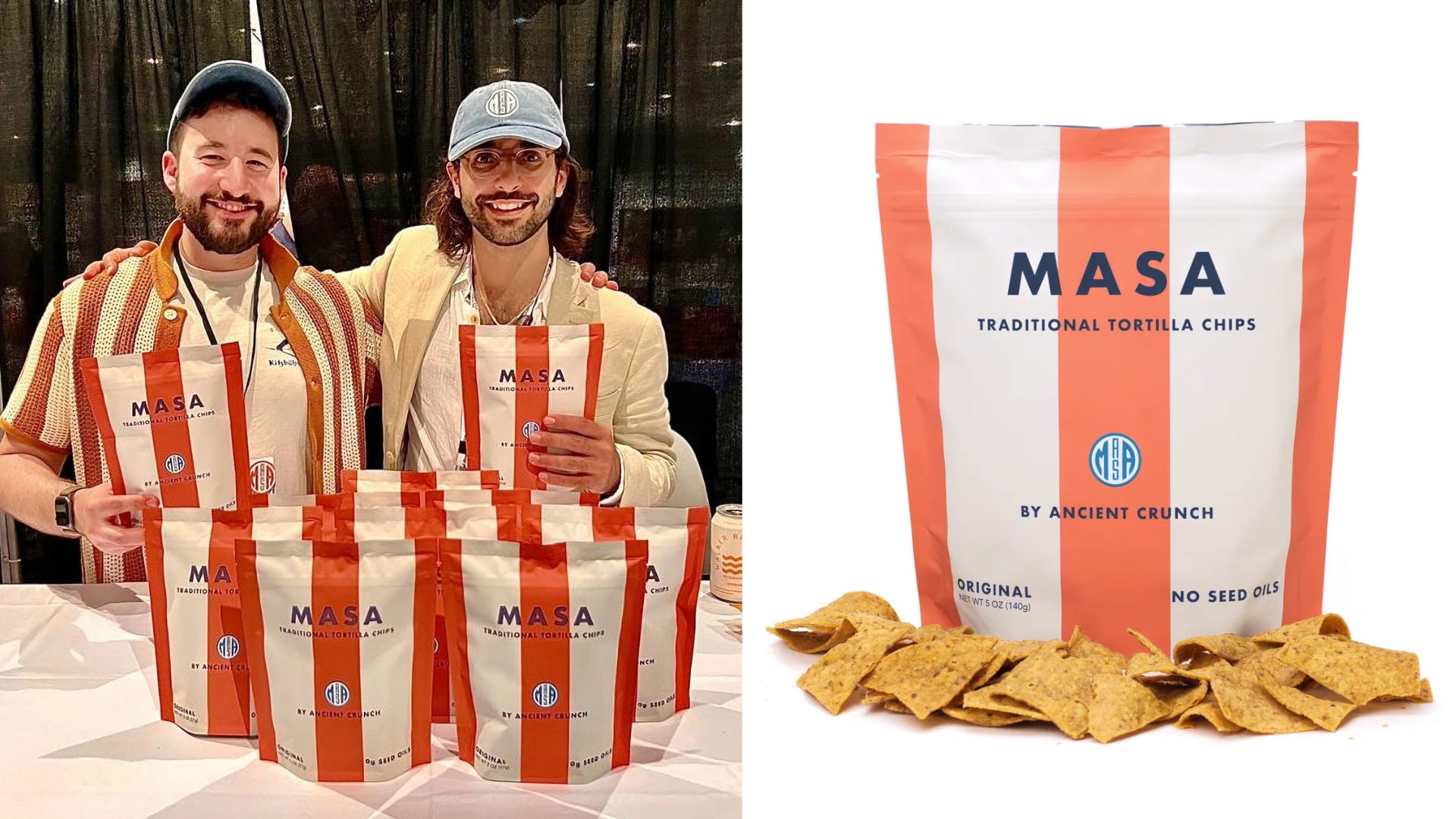
Meet Seth Goldstein, co-founder of Ancient Crunch, the company making better versions of everyday snacks. Its first brand, MASA, is a $13 bag of tortilla chips made with grass-fed beef tallow.
The idea started with Seth, hungover on a couch, eating “not very high-quality” tortilla chips. His friend and now co-founder, Steven Rofrano, started making fun of him about the seed oils. Steven had grown up with several health issues and cut seed oils from his diet long before it was trendy.
Seth’s response? “I worked 90 hours a week. If it’s not on Instacart, it’s just not in my option set.”
But a good chip without seed oils was hard to find. And even harder to make. After calling 200 factories, they realized most manufacturers only work with liquid oil. Beef tallow is solid.
So they rented a fryer for $600 a month from someone named Garlic Steve and made their own.
It worked. MASA sold out its first online drop in a day, and sold out its Sprouts launch in eight days. It’s now the top-selling tortilla chip at Erewhon and Sprouts.
Today, Ancient Crunch is a multi-million-dollar business building beyond MASA, with tallow-fried potato chips, tallow-popped popcorn, and more snacks in the pipeline.
00:23 - The minds behind Ancient Crunch
04:46 - Holy crap, people really love these chips
08:18 - He designed the package over a weekend
12:54 - As a brand, nobody knows that you exist
16:14 - Who the hell is gonna pay this price?
19:34 - Whatever you think your margins are, they’re probably worse
23:35 - Make chips, sell chips, keep the business
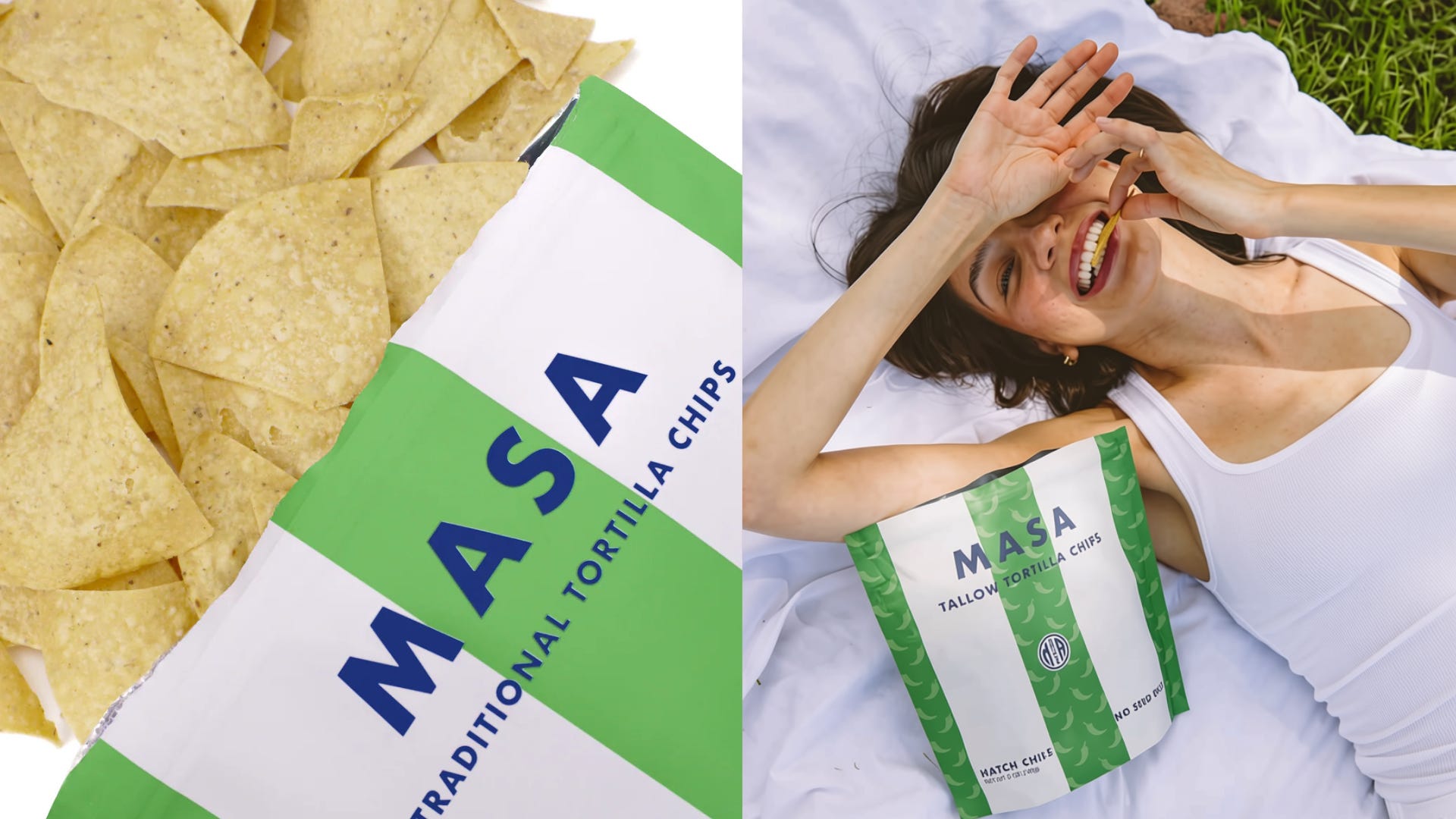
200 factories: Told them “great idea, can’t do it” before they figured out how to make it themselves
$600/month: What they paid to rent the fryer that got their chips off the ground
8 days: How long it took Sprouts to sell out of its first order of MASA
Not all revenue is created equal. A first sale means someone was curious. A second sale means they liked the experience enough to pay for it again. Seth doesn’t stop at Shopify’s repeat-customer rate. He tracks cohorts to see how many come back for purchase two, three, four. That’s what convinced him MASA had real staying power, and that it was time to go all in.
Price for the business you need to build. MASA’s production costs were too high for the price retailers initially wanted. Instead of squeezing margins to fit someone else’s spreadsheet, they priced around what actually costs to build a good product and profitable business. “A true 50% margin is probably the lowest any business in CPG should really go,” Seth says.
Make every foot of shelf space count. A retailer has only so much shelf space, so the question isn’t only how many units you sell. It’s how much revenue those units generate from the space they occupy. A SKU doing 1,000 units on one foot of shelf can be more valuable than one doing 1,200 on two. Sales per foot tells the retailer whether you’re earning your space.
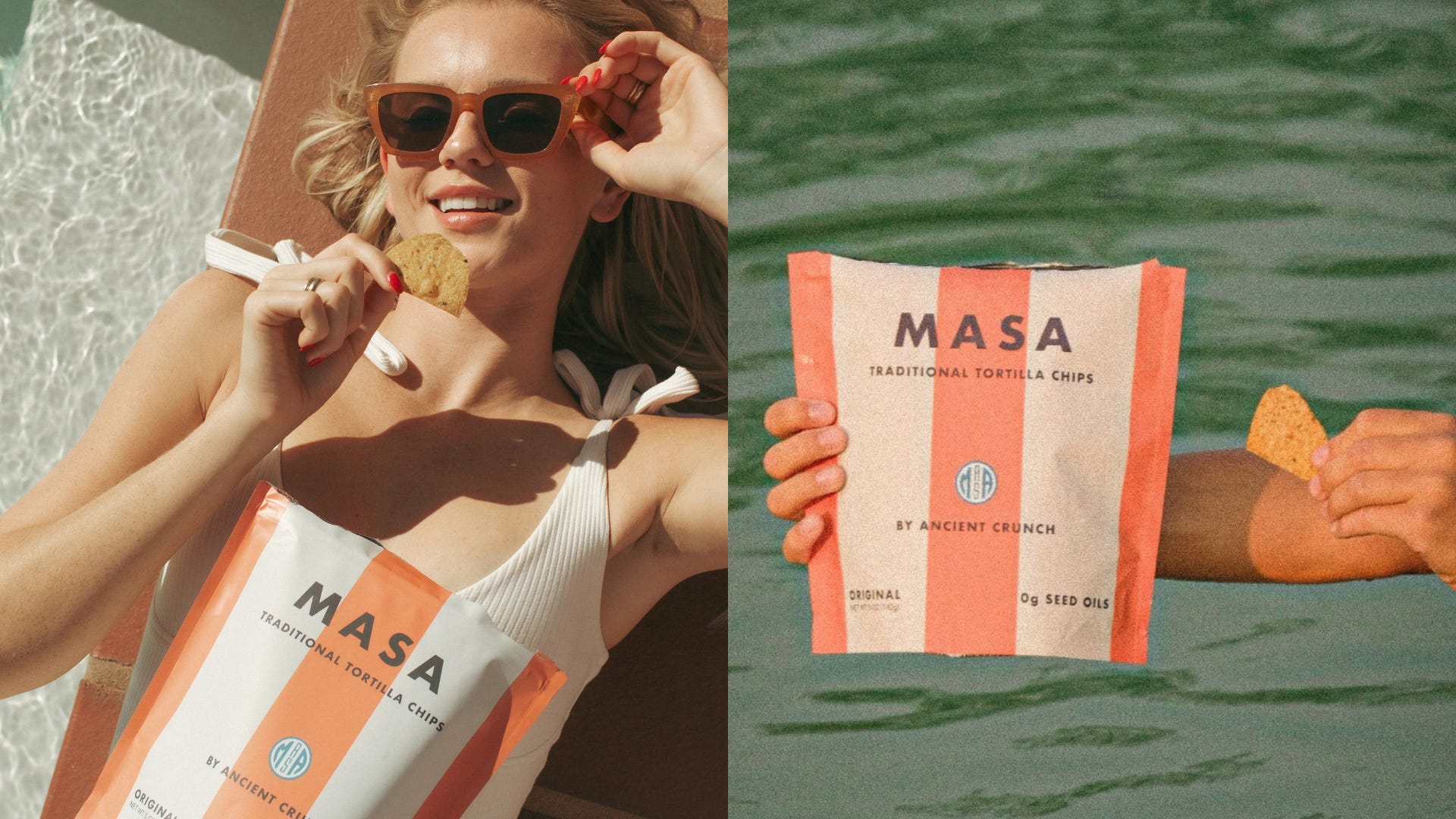
Build a brand people want to be seen with. MASA could have turned its bag into a nutritional billboard: organic corn, grass-fed tallow, seed-oil-free, all the better-for-you badges. But they decided to keep the package clean and something people actually want to show off. “If you’re delivering a commodity, you’re missing out on probably the biggest value-add you can provide to a customer, which is delivering an experience,” says Seth.
Not spending on marketing is not a badge of honor. For its first 18 months, Ancient Crunch barely spent on marketing. Steven already had an audience, the brand was growing organically, and they took that as a sign they were doing something right. Then an investor pushed back: “It’s cool to do well while handicapping yourself, but what if you didn’t handicap yourself?” They changed course and grew 5x the following year.
Market signal → The best brands give customers something to buy into, not just something to buy. The product is the starting point; the brand is where you create value beyond it.
The cohort reality check
Pull your last 6–12 months of first-purchase cohorts and track how many customers come back for a 2nd, 3rd, and 4th purchase.
Where do customers drop off? Dig into product, price, frequency, or replenishment.
Is retention improving or slipping? Find out what changed across newer cohorts.
Who are your best repeat customers? Look for patterns by customer type, product, or order size.
Which channels bring them in? Put more acquisition dollars behind the channels with the best repeat behavior.
Are you getting more customers or better customers? Growth only gets more valuable if the people you’re acquiring actually stick around.
Don’t obsess over one repeat-rate number. Look for patterns where customers drop off, come back, and whether newer cohorts are getting better or worse.
IN PARTNERSHIP WITH
Are you a brand looking to scale your social media presence?
Introducing AdFairy! The easiest way to get your products seen by millions across TikTok, Instagram, YouTube, and Facebook.
AdFairy offers guaranteed CPM influencer campaigns, so brands know how many views they’ll receive, before even starting a campaign. Get access to thousands of pre-vetted creators so you can can lock in your CPM upfront and have peace of mind knowing you’ll never overpay for content.
Ready to scale with guaranteed reach? Book a demo.

SKUs get spicy: From chocolate to salmon to fruit. When it comes to line extensions, it’s add heat, serve, and enjoy.
Pouches are the new hot packaging: Sleep, focus, energy, oral care… pouches are the new delivery system for functional products.
Big Food’s lawyers are eating our lunch: 9 companies account for 1/3 of global food-policy lawsuits.
Private labels want more shelf space: Retailers are investing harder in their own brands, putting up an increasingly expensive fight for shelf space.
When sardines meet salad: On the heels of a viral Whole Foods limited-edition collaborative tote bag, Fishwife teams up with every office’s favorite lunchtime salad.

Aug 13 (NY): How Brands are Rethinking Returns without Killing Customer Trust
Aug 13 (Chicago): Taste Radio Meetup
Aug 17-Dec 2 (Virtual): In the Room with 4 Retail Buyers
Aug 18 (Virtual): McKinsey’s The State of Grocery North America 2026
Aug 18-20 (Denver): Newtopia Now
Aug 19 (NY): GROW New York 2026
Aug 19 (Virtual): Selling at Walmart: Why, When, & How to Win
Aug 19 (Virtual): Workshop: AI for CPG Brands
Aug 21 (Application Deadline): Hudson Kitchen: The Food Business Bootcamp
Sept 8 (NY): The BFCM Pre-Game with Shopify
Sept 15 (San Diego): Taste Radio Meetup
Sept 16 (San Francisco): Taste Radio Meetup
Sept 16 (NY): The Drink with Benefits Summit
Sept 22-24 (Las Vegas): Shoptalk Innovation Week
Oct 1 (Malibu): Founderland
Oct 1 (Application Deadline): Founders & Founders by Startup CPG
Oct 5 (Nomination Deadline): 16th Outstanding Independent Grocer Award
Oct 7-8 (NY): Food HealthTech Live
Oct 20-21 (Call for Speakers): Consumer Goods Sales & Marketing Tech Summit
Oct 20-22 (Irving, TX): Rooted Expo
Oct 28-29 (Miami Beach): The Miami Beach Food & Beverage Expo
Oct 31 (Application Deadline): Startup CPG Pavilion at Winter FancyFaire*
Dec 3-4 (LA): Nosh Live


