


Happy Tuesday. This week, we’re sharing:
🥣 The founder putting creatine in cereal and feet pics in Times Square
⚖️ 10 questions with a CPG lawyer (inc. whether you can just use AI)
🍌 Walmart goes wealthy, grocery shop tourism, and we’ve hit peak banana

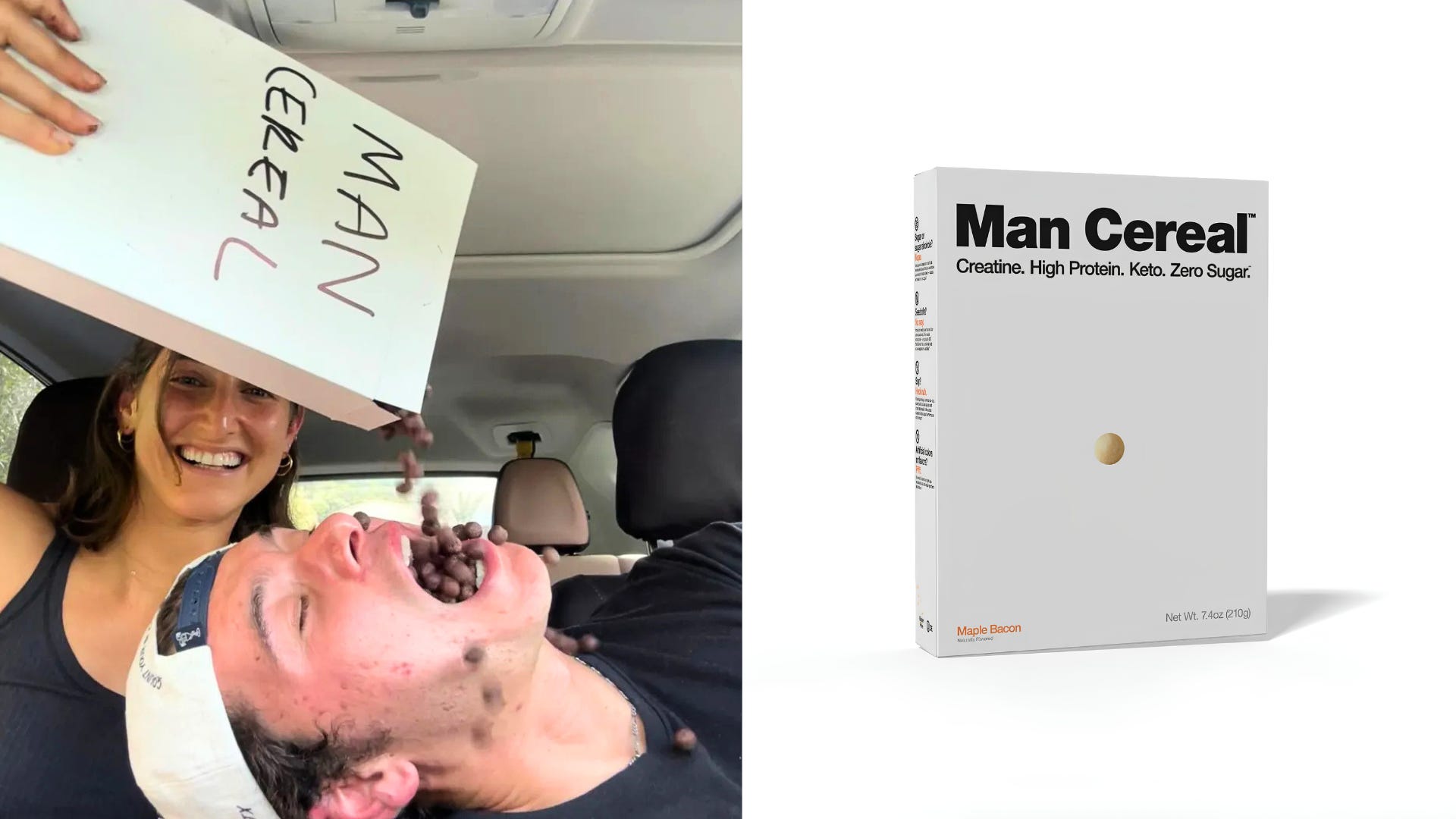
Meet Dejan Rankovic, co-founder of Man Cereal, the high-protein, low-sugar, creatine-infused cereal that’s bringing men back to their morning bowl.
He and his co-founder Emily Straus met at Dr. Squatch in 2020, where they learned growth marketing, disruptive marketing, and how to sell to men. They spent four years batting around startup ideas before landing on one Dejan used to eat everyday: cereal.
The last major cereal shake-up was Magic Spoon back in 2019. Since then, the category’s grown healthier and more family-friendly, but not more exciting. Nothing for the men who still love cereal, but just didn’t have a reason to eat it anymore.
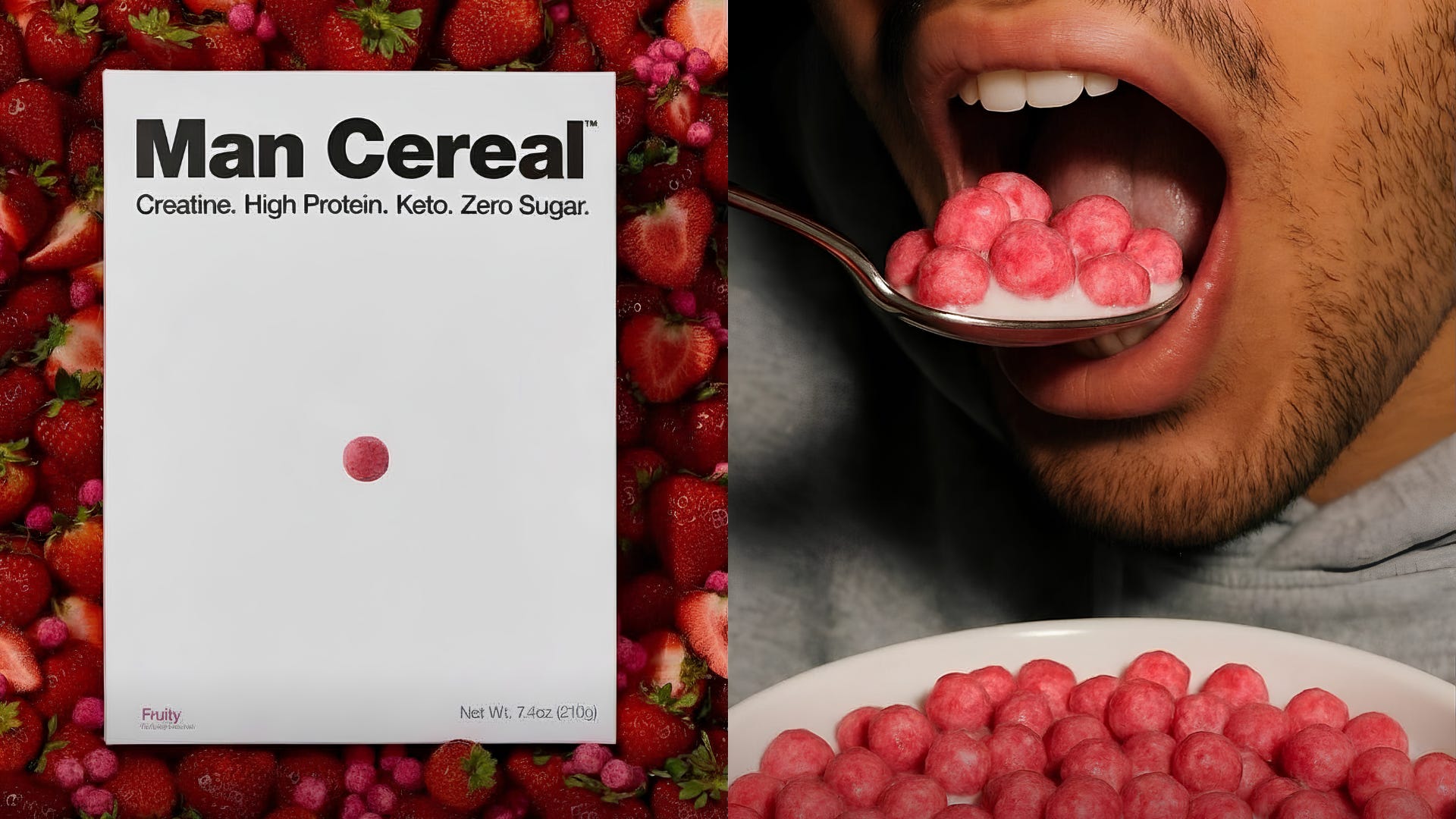
The idea was simple. The execution was anything but. Man Cereal isn’t just a new cereal, it’s a new kind of cereal. High protein, low sugar, and the first to add creatine. A cereal built for men that isn’t trying to bring back an outdated view of masculinity. It’s poking fun at it and inviting everyone to be in on the joke.
00:11 - The minds behind Man Cereal
05:17 - We closed the round in two weeks
09:30 - A lot of men don’t eat cereal anymore
14:32 - My favorite one is the “Send Feet Pics”
19:23 - 40,000 to 50,000 boxes on just DTC
23:18 - If you work in food, have a food scientist
27:36 - Love what you’re doing or you’ll flame out
9 out of 10: Manufacturers who said no to making creatine cereal
40,000-50,000 boxes: Sold through DTC
2 weeks: Time it took to raise a 7-figure round
Don’t confuse your ingredient with your product. Early on, Man Cereal had to decide whether it was a creatine solution or a meal replacement. Two very different businesses: a creatine solution optimizes for the dose, while a meal replacement has to deliver on macros, quality, and taste. Decide what you’re building first because everything downstream follows.
The line between a brand and a bit is thinner than you think. Man Cereal knew the name alone would get people talking. The harder part was making sure people got the joke. Too serious and it risks feeling like outdated masculinity. Too ironic and it becomes novelty. The strongest challenger brands find the middle: a point of view people get behind, not just a punchline people share.
Founder mode ≠ manager mode. Dejan ran growth at Netflix and helped scale Dr. Squatch. Nothing prepared him to build a food company with two people in it. “Being a founder at stage zero is very different than being a middle manager,” he says. At big companies, you make decisions with data and process. At zero-to-one companies, you have to go with your gut.
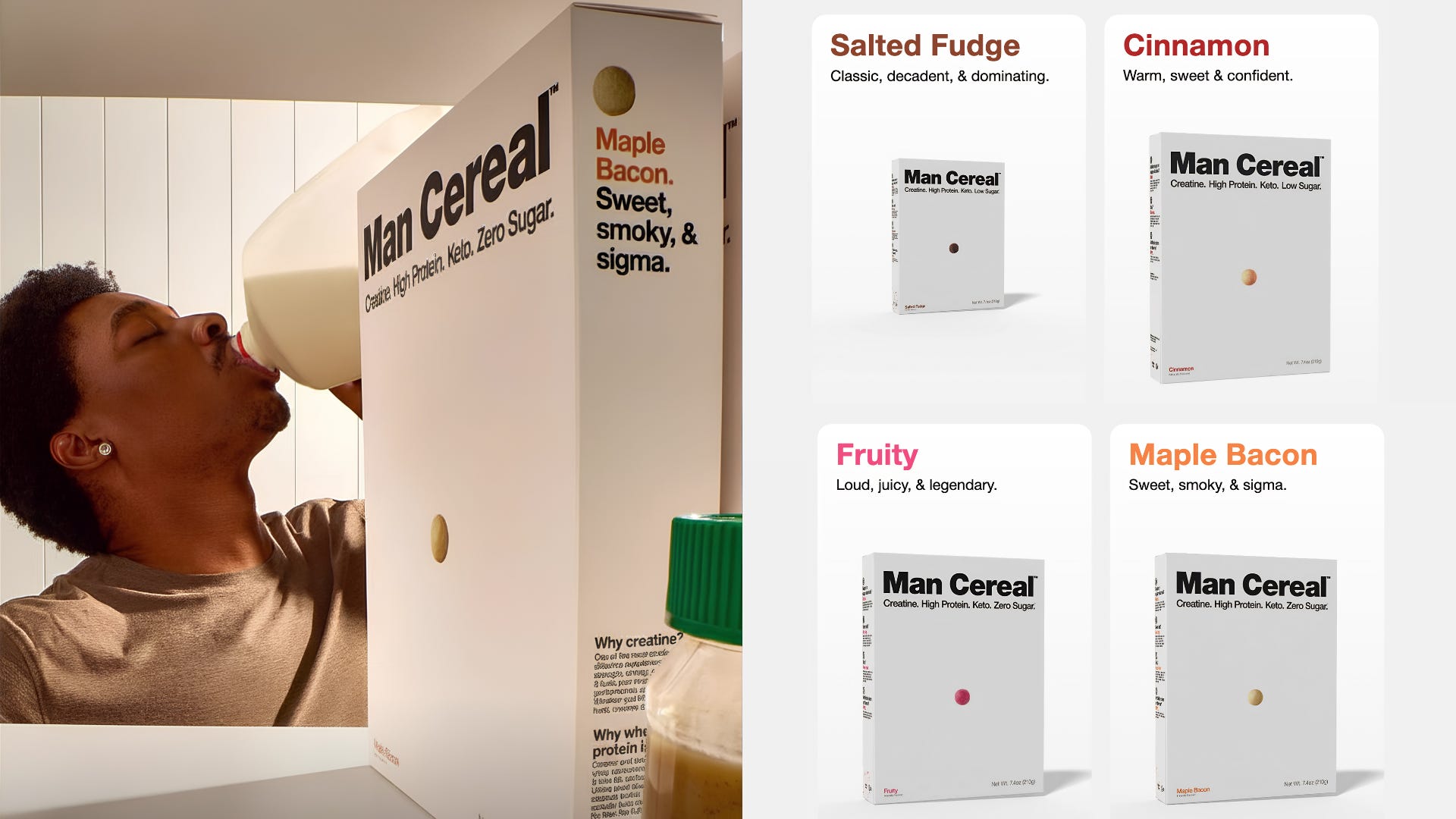
The more you’re testing, the less you’re moving. Man Cereal’s first production run combined three unknowns: a creatine-infused cereal, a maple bacon flavor, and a manufacturing process never scaled before. Looking back, Dejan’s advice is blunt: “Why are you making it so hard for yourself? Just do chocolate right with creatine, call it a day.” One new variable is innovation. Three is a science experiment.
If you’re raising, find a venture scout. Most founders see fundraising as a numbers game: more emails, more meetings, more pitches. Man Cereal found a faster path through a venture scout. Venture scouts pre-vet founders, make meaningful introductions, and shorten the fundraising process. Once one was in the picture, Man Cereal closed their first round in two weeks.
Market signal → Differentiation alone doesn’t build brands. You also need a reason to exist, a moment when people need it, and a brand people want to be part of.
The 4-part product test
A lot of products are different. Fewer are different for a reason. Make sure yours is the latter:
Differentiated: What makes the product meaningfully different?
Definitive purpose: What job does it do better than anything else?
Right timing: What’s happening for this product to make sense now?
Distinct brand: Why is your brand the one to tell this story?

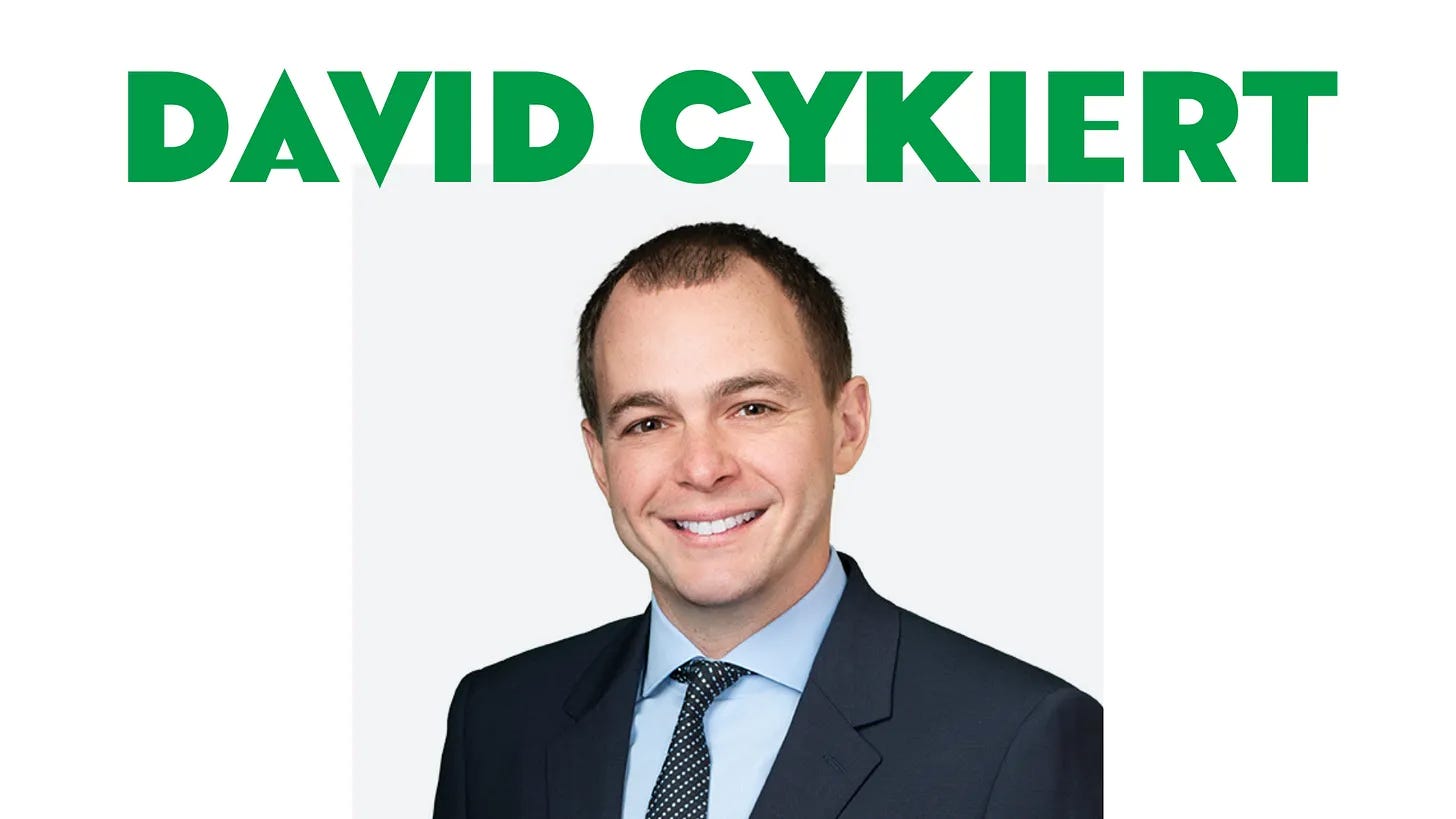
David Cykiert is a lawyer for food and beverage founders.
He specializes in venture capital and emerging growth (VCEG), doesn’t bill for calls, and has heard “I’ll just ask ChatGPT” more times than he’d like.
As a shareholder at Polsinelli, he’s helped founders with all the details that seem unimportant when you’re launching, and very important when you’re raising money. We talk about everything from IP ownership to cofounder conflicts, and why the best lawyer is someone you’d get a beer with.
Everyone says “get a lawyer early.” Why? A lot of founders end up choosing between a big law firm or their uncle who does labor and employment law. While employment is important, not every lawyer is equipped to help you structure a venture-backed company. The good news is that early-stage legal work is pretty standard. And venture lawyers are used to having open, no-strings-attached conversations up front.
So how much does a CPG lawyer cost? Getting a company off the ground (setting up the right structure, issuing shares, etc.) usually costs a few thousand dollars. I think about early-stage legal work less as a revenue opportunity and more as a trust-building opportunity. If the company is successful and grows, there will be a million opportunities for lawyers to make money.
How do I know if I have the right lawyer? The value of a lawyer isn’t just the documents they produce. Legal documents are increasingly assisted by AI. The real value is everything around them: the conversations, the judgment, the things they help with before they become problems. There are a million lawyers. Find someone you like. Find someone you wouldn’t mind having a beer with.

Enjoying berries this summer? Thank Driscoll’s, the 2nd-highest-earning brand in U.S. supermarkets (behind Coca-Cola), shipping 4B containers across 60 countries each year.
Walmart goes wealthy: As the economy goes even more K-shaped.
Where all the CPG pacesetters at? In the baby, bubbly beverage, happiness, and no sugar categories.
Why are grocery store prices so high? Jessica Cheung of The Daily investigates.
We’re going peak banana: The fruit with mass a-peel 🍌
CPG makes the biggest travel trends 2026: Grocery shop tourism, dry tourism, and sexy seaweed.
The 1st UTA Culture Canon: “Show up where passion runs highest: in stadiums and arenas, on screens and FYPs.”


July 12-15 (Chicago): IFT First
July 16 (Virtual): UNFI and KeHE Deductions
July 18 (NY): Eater World’s Fare
July 19-24 (New Orleans): Tales of the Cocktail 2026
July 23 (Virtual): Claude & CPG 101
July 23 (Virtual): 2026 Functional Beverage Trends ✨✨ (I’ll be making an appearance on this one!)
July 27 (Virtual): Pitch Practice
Sept 22-24 (Las Vegas): Shoptalk Innovation Week
Oct 20-21 (Chicago): Call for Speakers at the Consumer Goods Sales & Marketing Tech Summit


