


Happy Tuesday. This week, we’re sharing:
💯 The 100% fruit pop that went from launch to Costco, Shark Tank, and 1,000+ doors
🍨 Van Leeuwen vs. Rebel, the evolution of functional beverages, and cabbage-core
📅 Winners and Wipeouts, Creators and Brands, Founders and Funders

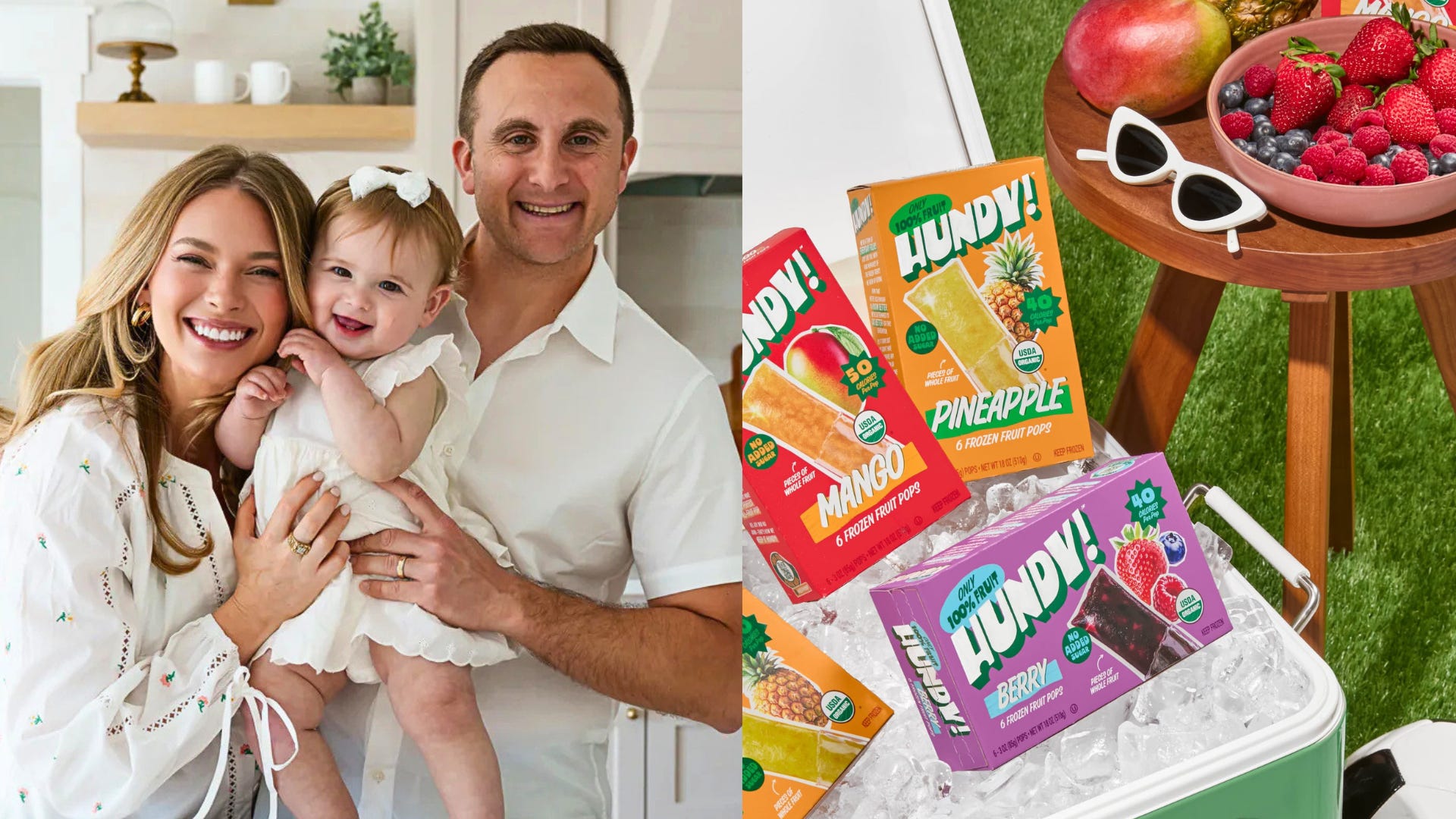
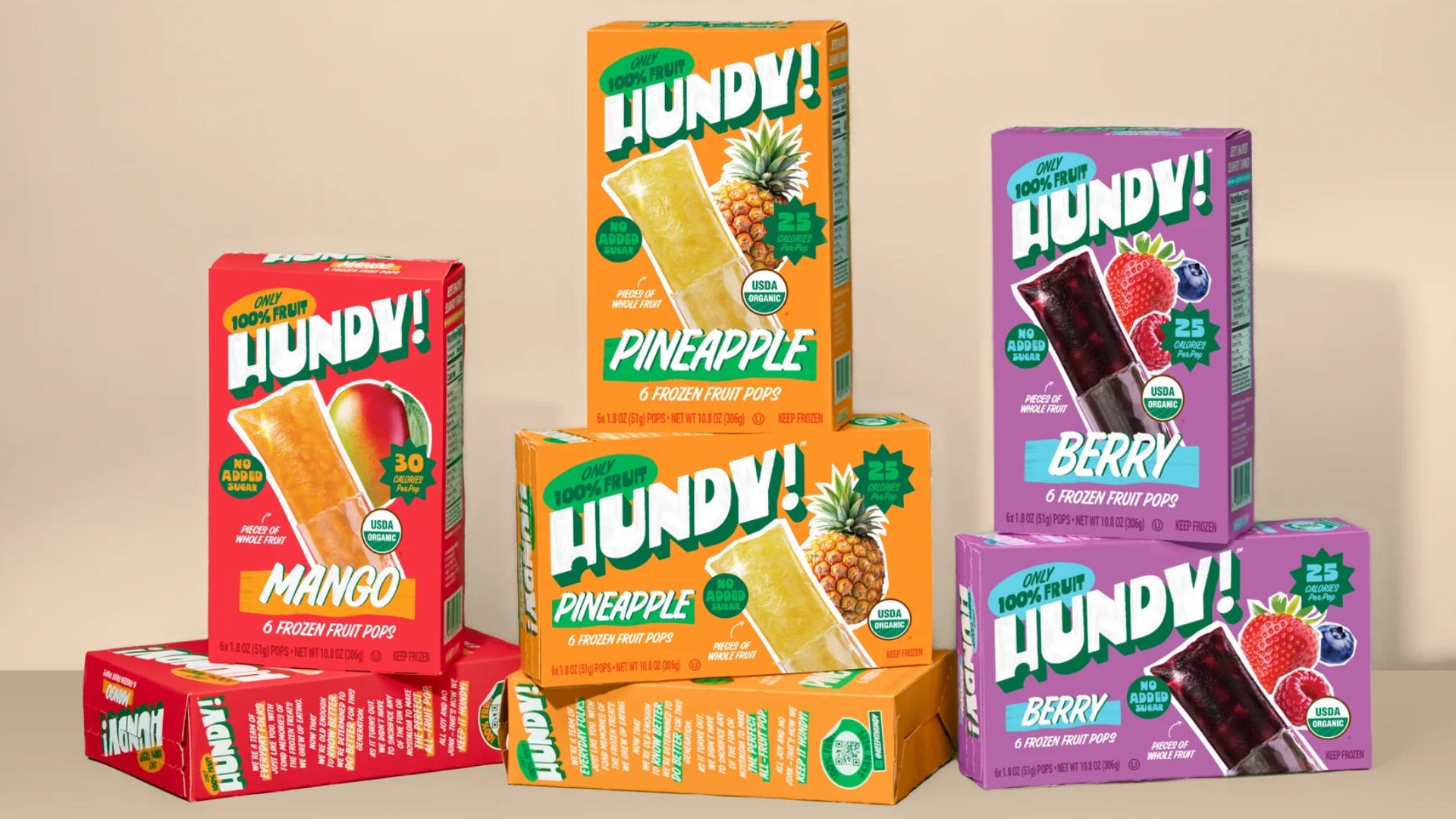
Meet Michelle and Aviv Schor, the husband-and-wife team behind HUNDY!, a frozen fruit pop made with one ingredient: organic fruit.
No juice concentrate. Just fruit.
On paper, it sounds simple. In reality, it requires building custom equipment and learning that when your only ingredient is organic fruit, every batch is different.
That dedication caught people’s attention. With only a pilot batch, HUNDY! landed Costco as its first major retailer, appeared on Shark Tank, and attracted a passionate group of investors, ranging from NBA star Trae Young to people who just loved the product and wanted to get involved.
One year after launching into retail, HUNDY! is in about 1,300 stores and has raised just under $1 million.
00:15 - The minds behind HUNDY!
4:04 - Our total Expo West setup was about $800
08:37 - He yelled HUNDY! at the top of his lungs
11:48 - You’re not done until it’s on shelf.
15:17 - Blur the line between premium and conventional
20:01 - Nothing’s like Shark Tank
25:14 - Investors just buying the product and reaching out
29:51 - Lift the rug and vacuum until everything’s picked up
$800: Total cost of Hundy’s first Expo West booth in 2023
2 weeks: Postpartum when Michelle pitched HUNDY! on Shark Tank
1,000–1,300: Retail doors after just one year of distribution
Simplicity is the hardest thing to build. A consumer looks at HUNDY! and sees a popsicle made from fruit. Michelle and Aviv see custom machinery, inconsistent fruit, and countless trips to their co-manufacturer. “We learned very quickly why this hasn’t been done before,” says Aviv. As demand increases for short ingredient lists, the competitive advantage shifts from marketing to manufacturing.
Your first version should optimize for learning, not scale. For their first Expo West, Michelle and Aviv’s strategy was: spend less money and ask more questions. They spent about $800, rented one of the smallest booths, and focused on one question: Would buyers care? The initial goal wasn’t to look established. It was to find out if there was something worth building.
The hardest part of getting feedback is knowing what to ignore. Founders either ignore feedback or overcorrect for it. HUNDY! found the middle ground. “You don’t have to take in everything. But if it’s consistent enough, you should listen,” Michelle says. Their packaging redesign wasn't caused by one comment. It was a decision based on repeated feedback and friction they saw across retailers and consumers.
Treat new packaging like a product launch. New packaging meant new UPCs, printer plates, distributor pack changes, retailer paperwork, updated planograms, and delaying retail launches until everything was ready. “It’s not an overnight task if you’re going to do it the right way,” Michelle says. Great packaging isn’t just designed well. It’s rolled out well.
You’re not done when production ends. First-time founders may think manufacturing is the finish line. It’s more like halfway point. Between production and purchase are dozens of unglamorous details: freight, distributors, planograms, packaging specs, and tons of paperwork. While a polished product can create demand, only a system can fulfill it.
Market signal → Behind every short ingredient list is a complicated, often expensive operation. The fewer ingredients you rely on, the more you'll rely on process.
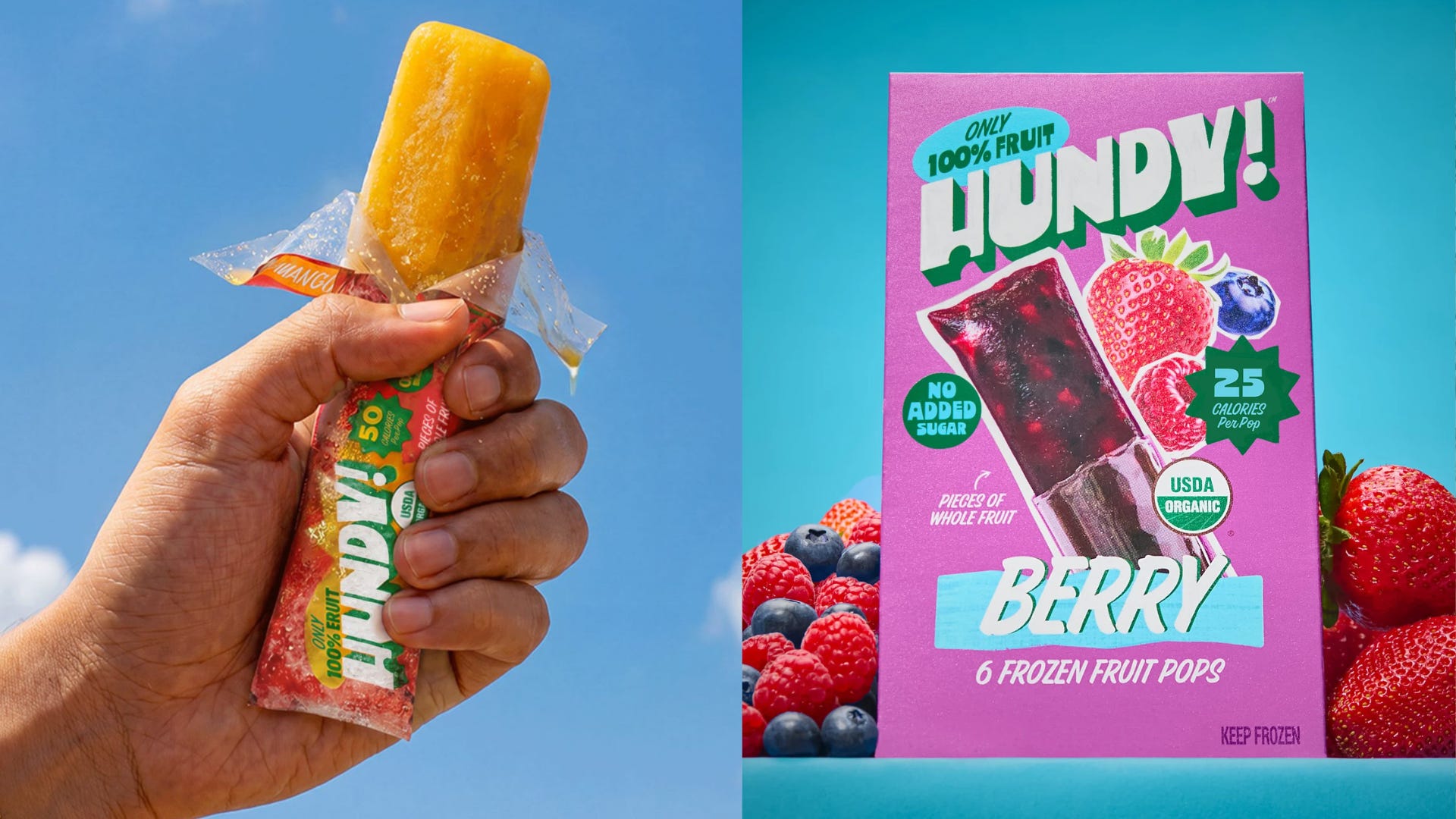
The 2x2 package test
A package built to scale has to work for two people and two shelves. If you only optimize for one, you’ll eventually lose the other three.
People:
The end user: Does the package make them want it?
The buyer: Does the package give them a reason to buy it?
Shelves
The premium shelf: Does the package look like it belongs?
The mainstream shelf: Does the package feel approachable?


The evolution of functional beverages: First, it was about performance. Then wellness. Then optimization.
Jam session: Smash Foods raised $18M led by L Catterton, riding the wave of the massive success of their Jammy Protein Bites
Snack attack: 55% of shoppers now eat three or more snacks a day. We’ve shifted from traditional meals to moments (commute, gym, afternoon slump).
Sweets had a good run: Hershey is doubling down on salty snacks, as legacy players follow consumer preferences away from the candy aisle.
Food that fights back: 71% of U.S. adults crave highly textural treats, while 58% want bold, “extreme” flavors.
The tallow trade: As beef tallow replaces seed oils in more products, we’ll see healthier ingredient swaps become a go-to positioning strategy.
Cabbage-core: Pinterest Predicts says 2026 is the time to “Live, laugh, leaf!” Think kimchi cocktails, leafy wraps, and charred “steaks.”
And another leafy green gets back in our good graces: After the recent lettuce scare, Taco Bell brought back the Enchirito at a $1 price point.
Package déjà vu: The Van Leeuwen vs. Rebel packaging battle shows that while “pastel” or “minimalist” isn’t protectable, a specific combination of elements might be.

July 31 (NY): Winners and Wipeouts in Social Commerce
Aug 4 (NY): Creators and Brands Open Mic & Mixer
Aug 13 (NY): How Brands are Rethinking Returns without Killing Customer Trust
Aug 13 (Chicago): Taste Radio Meetup
Aug 18 (Virtual): McKinsey’s The State of Grocery North America 2026
Aug 19 (NY): GROW New York 2026
Sept 8 (NY): The BFCM Pre-Game with Shopify
Sept 15 (San Diego): Taste Radio Meetup
Sept 16 (San Francisco): Taste Radio Meetup
Sept 22-24 (Las Vegas): Shoptalk Innovation Week
Oct 1 (Application Deadline): Founders & Founders by Startup CPG
Oct 7-8 (NY): Food HealthTech Live
Oct 20-21 (Call for Speakers): Consumer Goods Sales & Marketing Tech Summit
Dec 3-4 (LA): Nosh Live


